Saturday, March 7, 2015

NOW YOU SEE US NOW YOU DON'T


NOW YOU SEE US NOW YOU DON’T!
THE STRUGGLE OF THE BLACK COMMUNITY FOR ACCURATE VISUAL REPRESENTATION IN POPULAR MEDIA.


Recent demographic studies evincing the substantial increase in the population of non-white Americans may have recently triggered intensification in popular network television and cable programming with lead black American roles.   Furthermore, it may have stimulated the resolution a long-playing disparity between racial population demographics in America and the public face of mainstream American media in general.   Heretofore many black Americans had been convinced that programming had not been designed to include them in anything except ancillary roles because they represented a minority ethnic group with limited economic power.   Today’s population demographics show a completely different picture as they have for well over a decade.  The slow response of the media to morphing population trends can be attributed to many different variables however now that things are on the move it is far more important that  the black American community seize  the unique opportunity to manage its image is portrayed in shows such as “Empire” and “Scandal”.  Are the visual images we see conveyed as representations of the black American community realistic or are they grossly inaccurate portrayals that will have the ultimate effect of making our real selves invisible?  Now you see us now you don’t!  I am far less fascinated with what appears to be mainstream media’s delinquent acknowledgement of racial diversity and the economic viability of black themes and lead artists, (they are popular trends germane to the caprices of the entertainment industry), than I am with the manner in which black America is represented in  the powerful images shaping  the world’s view of us.    
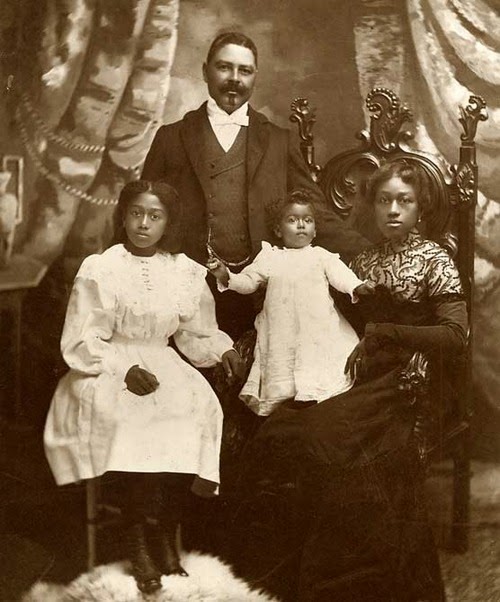


The black community must carefully scrutinize its sudden rise to media stardom stepping away from and just into the shadow of economic luster and tensile just long enough to be certain that the images being sent represent a wholesome and constructive message about who black people are, where we have come from and where we desire to go.  The black American community has survived hundreds of years of negative American media that has looked through us, away from us, or down upon us leaving the snide residue of a cruel and savage caricature as injury.  Now that mainstream American culture, (driven by corporate dollars), wants to give us visual representation, (in exchange for economic enfranchisement), proportional to our demographics we must carefully scrutinize the images paraded before us.  Desperate as we are to see ourselves shown in any way at all we cannot afford another reckless plunge into the soulless belly of Post-Blackspoitation America.  We have to ask if this is a smoke-screen intended to divert our attention from critical issues that continue to divide and conquer our community or if mainstream media has suddenly grown some good old-fashioned human compassion desiring our best interest at heart or making up for old wounds!  Personally, I’d not bet my last monopoly dollars and get out of jail free card on it, but that’s just me being me.  Stranger things have certainly happened in the universe but one thing is certain, a corporate America that got its start on the backs of slaves as free labor cannot long ignore the economic and professional potential of the ancestors of those slaves especially when its own numbers are exponentially dwindling.  Eventually, (if the black community does not do so itself) other interests will exploit the full potential of black Americans, it is really a matter of who gets on the bandwagon first.  So now that black Americans are back on the menu it's time for a quality-control check.  What's the ultimate verdict; did we pass or are we just passing?
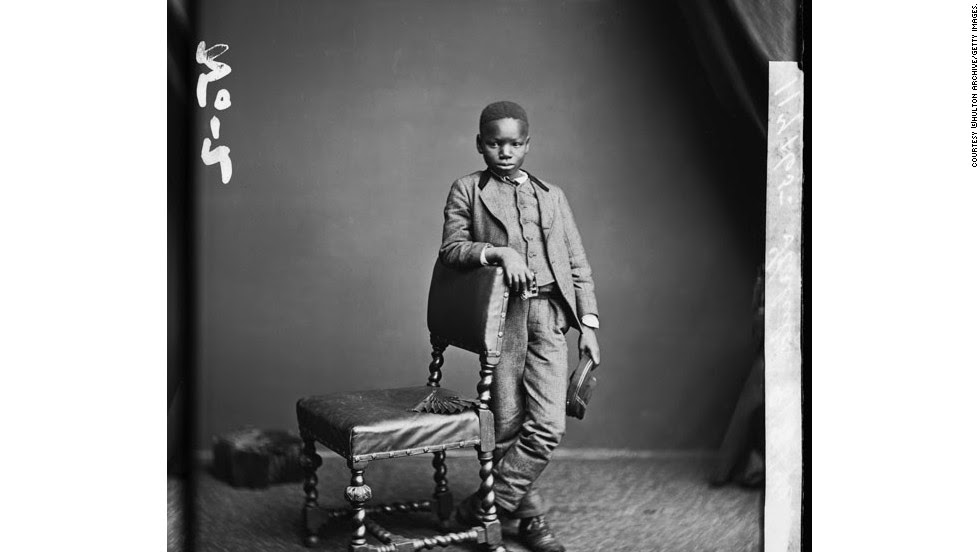


Are the images we are beginning to see in the media really us? Do they have the kind of ironic integrity and uncanny verisimilitude Voltaire would marvel at? Or do they portray a mythic, fantastic non-reality light years from any semblance to the way black American’s really live and think? Most important, do they promote a healthy, positive and wholesome image of our peoples and our struggle?  Do they provide the basic essential kernels of fortitude necessary to restore our failing communities?  It is only fair to also ask the question, "is it a reasonable expectation for mainstream media to be held accountable for conveying anything wholesome, substantive and enriching about black people"?  Knowing the nature of the beast going in should we even open ourselves up for the disappointment this sudden marriage made in media heaven might deliver?  After the mistakes of The Civil Rights Era black Americans really must be savvier with these kinds of things.  Nobody's gong to work harder to promote positive imagery and channel profits from our endeavors to restore our communities than ourselves, we are the primary stakeholders but not the primary players.  So if we are going to be exploited for a season then we had better get the most out of it and being in demand does afford us that privilege.  The default is what we already know, being ignored and having to figure it out anyway.  Putting in some good intellectual energy at the outset can possibly save us decades of irreversible regret down the road but is anyone even saying that we need to look before we leap?  Is it more important for us to see a black face on our television screens after decades of image deprivation or is it more critical to closely monitor any and every image to make certain it follows closely our socio-political and economic agendas collectively recognized by progressive black Americans.  One could argue that there are no established socio-political and economic agendas, that black people are all over the place fighting against one another to get to the same place as a collective.  The oxymoronic nature of this model as a cultural assessment/accusation does not seem too far from reality.  After this trend has dried out will the pendulum swing to some other ethnic group leaving black Americans in the same vacuum as before?  That is the billion dollar question in the continual struggle of the black community for accurate and substantive respectful representation in popular media.


fin

Written By BIGDADDY BLUES


A COMPARATIVE ANALYSIS OF RACE, CULTURE AND MEDIA IN AMERICA

Other cultures have bought traditions with them to America that they celebrate through media.  There are many Latino, Asian, African, Caribbean and Arabic television channels, radio stations and cable stations that broadcast vital media 24 hours a day.  These media venues including print media help keep their communities informed and cohesive.  These stations have their own media celebrities who help to project positive images that support their culture, businesses and institutions.  Black Americans do have some media venues as well like BET that reach a broad range of their community but unlike many other cultures the black American communities focus is more keyed into a mainstream media that does not promote positive black images.  

One of the main focuses of the black community in the first quarter of the 21st century should be the cultivation of business entrepreneurs who will ultimately establish large media based corporations that can address the disparity between mainstream media and the black community telling our stories from our perspective.  Another bonus of owning our own media is the creation of career opportunities for black American professionals who are being turned away from mainstream corporate doors.  This economic foundation really is the platform that will ultimately solidify and help restore the black community.  

BIGDADDY BLUES


Saturday, February 14, 2015

THE JOURNEY OF MANHOOD AS A MEDITATION AND AFFIRMATIION PASSED ON FROM FATHER TO SON


CIGAR, WHISKEY AND  FIRESIDE AFFIRMATIONS OF A
MAN’S MAN…

There’s nothing particularly unusual about being a man’s man or just a regular naturally masculine guy and also being gay.  I am always shocked when I hear other people stereotype gay men under a feminine umbrella when my gay experience to the contrary is filled with masculine gay men who unwittingly fail to set off societies Gaydar  whilst living comfortably gay lives.  When I look around seeing family in so many masculine brothers all around me it highlights an entirely invisible world of gay men who are never given a chance to represent the gay community in the eyes of those looking from the outside in.  Why some men are qualified as gay and others are not is purely a matter of prejudice and in many cases benign ignorance on the part of those who honestly do not know or care.  The end result is a perceptual stereotype whose faulty Gaydar scans all men but erroneously seperates them within a narrow meter-band of gay and straight or female-identified or male-identified based on a superficial evaluation of behavioral characteristics.  What gets lost is the broad spectrum of diversity embedded within the definition of what a gay man can be.  This fault is not isolated to the non-gay community; I have met gay men who have become so inundated in a world of femininity they no longer have the ability to identify with what you and I might call regular, masculine gay men.  Likewise and perhaps by default, many men who fill the broad category of what we might call regular, naturally masculine gay men have also surrounded themselves with themselves and through this type of social isolation they run  the risk that they may lose their ability to relate to their more feminine brothers.  It is a common social characteristic that people who share cultural similarities gravitate toward each other and there can certainly be no harm  in forming  Gemini-alliances as long as the attraction does not become a study of isolationism. 


I came out to my father at 15 years of age a rusty-butt teenager still catching turtles and crawfish, climbing trees and riding my 10-speed and dirt bike through the woods behind our house.  At that time he advised me that it was a sign of integrity to intelligently confront the nature of my sexual orientation but that otherwise nothing about me had fundamentally changed.   I was still the bright and ruggedly adventurous adolescent I had been a minute before that revelation and invariably the same held true that I had not transformed from the person I had been 2, 3 or 5 years before my unveiling as a modern homosexual in late twentieth century America and there was no reason to change in the seconds, hours, months and years hence.  My father has always been a master of rational thought; he possesses the ability to communicate complex messages in a simple, immediately digestible form.  What my father was saying to me that day was that regardless of what my sexual orientation was I was still the man I had always been and he expected me to fulfill his, my mother’s and my own high expectations for me.  Nothing, absolutely nothing had changed except that I had verbalized what my parents and I already knew.  My parents knew that I loved being a boy and that I was fascinated by the promise of manhood.   I was expected to continue growing in my exploration and accomplishment of manhood, to complete college and to become a pillar of my community.  If you had grown up in my family these values were sacrosanct and for my part I had no problem adopting them as my own.  My parents knew me better than I knew myself and in his way my father was also telling me that in my exploration of my gay manhood I should be careful not to affect the mannerisms and lifestyle of a culture I knew nothing about merely because it would embrace me as an openly homosexual man.  Today I am thankful that he challenged me that day all the while being a living example of the man and gentleman I should aspire to become…  For when I entered the gay lifestyle as a verdant youth I saw a world that did not possess any of the strong , wholesome family values to which I was accustomed.  It was a narcissistic world obsessed with sex at any cost.  It was also a world comprised of men whom I admired for being openly gay activists but whom I otherwise shared nothing in common besides my sexual orientation.  I was immediately dismayed at the strong masculine/feminine polarization and at that tender age did not understand the overlay of effeminacy in men who might otherwise be perfectly masculine.   I will admit that I was appalled at effeminate men at that time but it was because I had not the ability or interest to understand them.   Today I understand and respect the right of any man to be whatever he desires including his right to explore his feminine side to whatever extent he chooses; but that it is not the road for me… I love being a man and I am enamored of the manly things in this world… it is my right and privilege to feel this way…


There is a new and amazing kind of gay man waking up all around this country.  He is not stuck at one of the absolute poles of what we define a man to be or not to be.  There is nothing wrong with being at those extremes but what is wrong is society’s insistence on fitting all gay men into those absolute and outmoded cubby holes.   As more gay men become comfortable with their new freedom of expression and acceptance in mainstream culture they will also begin to demand that society represent them in a manner that better represents reality.  That is to say that all gay men are not effeminate so in time they will demand that the media and society stop misrepresenting them as feminine.  Since society disproportionately represents gay men as effeminate the backlash from gay men will be to lobby for revised media images that portray gay men closer to be standard for heterosexual men.  Rule number one of marketing is that consumers can be reached more effectively by media that utilizes images they identify with personally.   I remember the first time I walked into a popular gay bar called “The Delta Elite” in 1977.  What I experienced was completely beyond my comprehension, the men there, (or at least those whom I saw in my brief sojourn), appeared to be a grotesque caricature of feminine or masculine.  I evacuated myself from that club immediately; it was far too real for a 15 year old adolescent who had naively set upon a cool expedition to experience others of his kind.   As the kids say, I couldn’t get ready for what I saw that night; I have always admitted that.  At that time I had never heard of butch or drag, top or bottom I had no idea what trade was or prison trade and to be honest after my immersion in that world I was cured of all curiosity and went back to my turtles and to climbing trees.  Fast forward 4 or 5 years and the landscape of that club radically changed as did my ability to identify with what I experienced there.  But ever present were the words of my father reminding me that somehow this world was not an extension of the warm gracious home and family that nurtured me into manhood.  It represented a self-absorbed consciousness launched as an escape from the rapidly changing socio-economic structure of a once quiet southern metropolis.  It was the hush before the storm.  Within the next few years beginning with 1980 Aids would consume the lives of nearly all of my gay friends with no explanation whatsoever for why they were claimed and I was spared!  I watched them die as I became a man graduating from high school, entering and completing college and following in my father’s footsteps as a professional man.  When I finally woke up the world and I had radically changed and there was a quiet movement afoot pioneered by the two gay black activists Essex Hemphill and Marlon Riggs who would be consumed by Aids but whose legacy would transform the way the world thought about gay men.  Marlon and Essex defied the stereotypical image of a gay man they were robustly masculine and when I first saw them in the media it was a life transforming experience.  At the time I had no idea that I would actually meet and get to know them, to befriend them.   Without debasing anyone these two men proclaimed that a gay black man could look, act, talk and achieve the same if not better than any straight man and also stand as an example of robust masculinity.  The world had irreversibly changed and when Essex published his poem “American Wedding” the soil was sewn for the cultivation of gay marriage in America.  These men were not just image they were historic icons of the gay movement and they forced all men to confront the fact that gay men could be as masculine as anyone else…


What we see before us are a growing number of naturally masculine gay men or men who more closely mirror heterosexual men behaviorally except for their sexual orientation… Enter the new generation of gay men enjoying a rich, unprecedented time when homosexuality is as normal as fried chicken, potato salad and collard greens… this new generation of gay men does not have to affect campy behavioral stereotypes in order to belong to an insular community they are free to be whatever it is that defines themselves.  A gay man who more closely identifies with the behavior of traditional heterosexual men should not feel pressured to falsely emulate established gay behavior in order to be down with his peoples… they must accept him the same as they expect straight men who meet society’s standards for masculinity to accept feminine gay men.


So what do I mean by the term, “Naturally Masculine”?  I consider it to be a no brainer that all males are naturally males when viewed from a purely genetic perspective.  How much does genetics figure in a game that focuses more on tangible qualities considered to be norms for masculinity and manhood.  Genetics is an evolutionary process growing from infancy into boyhood then to adolescence and finally manhood but society has established behavioral overlays that qualify and quantify boyhood and manhood according to centuries old traditions.  So when I say naturally masculine I mean genetic manhood enhanced with the behavioral overlay of traditional, cultural manhood.  Because sexual orientation appears to be more subjective it is probably not genetic in most cases it is the result of individual preference and therefore not related to genetic or traditional-behavioral aesthetics of manhood.  I believe it is not clear rather sexual orientation is genetic or learned and I honestly believe it can be a healthy admixture of both but patently unique to the individual and therefore should be respected as a beautiful mystery… Traditionally homosexuality has not been associated with manhood as a social norm so it is not a hallmark of what the majority of people would call natural masculinity but historically many men fitting the classification of being naturally masculine have been homosexual suppressing their sexual orientation but adopting and cultivating the societal customs defining manhood.    We know that just because a majority agrees that masculine means this and not that does not make them right!  Nor does it make them or anyone else wrong for identifying with what is considered to be the societal norm whilst also adapting features that do not conform to social stereotypes such as homosexuality.  The bottom line is that we can launch a high-fallut’n debate on this issue until we can no longer draw breath but the simple and most elegant solution is to be tolerant of everybody.   


In order to be tolerant we first have to be able to identify and understand the problems with our ability to quantify qualify and process differing values of masculinity.  It is a commonly accepted truth that when we are intolerant we oppress the freedom of others.  The gay movement has fought hard against intolerance and its war has begun to show miraculous evidence of a successful revolution.  Can it be possible that those presumed to be oppressive simply because they represent a majority are not actually so, that they are simply being themselves and have no real ill-intent?   Try to convince the underdog?  Well, during their struggle as gay men push father away from being the underdogs they really must thank their heterosexual comrades for proving they are not the oppressors.  I think there is enough room in this world for gay and straight men to both carve out and enjoy their own slice of paradise!

I overheard a man saying that,  “The flamboyantly feminine and masculine behavior patterns that typified gay culture of previous decades are no longer necessary as mainstream acceptance and cultural assimilation begin to open up more options in the broader spectrum of human culture”.  But that argument seemed to reduce gay men to a “Behavior Pattern” ignoring them as living breathing human beings and men.  So I reexamined my definition for “Natural Masculinity” and now I caution everyone to stay away from being overly clinical in your understanding of the human condition… manhood and masculinity cannot be totally defined though behavior and certainly not by cultural norms and folkways, there must be a great deal of flexibility to allow a male to insert his unique brand of self into the equation.  So what we can qualify as naturally masculine may or may not conform to societal norms or traditions and there should be a vast range of interpretation allowing a male to be the man he desires…  that is if he even desires to be a man or not. 


 As for the fear that due to cultural assimilation the extreme values of homosexual behavior will disappear as gay men assimilate social norms of masculinity and gay men will not find each other in the absence of these cherished hallmarks we can safely expect that being open about ones sexuality will certainly allow gay men to easily identify communicate with each other.  It is absurd to expect that gay men will all move away from traditionally gay behavioral patterns through cultural assimilation into the mainstream but it will certainly occur to a greater extent by default.  What is most important is that gay men are able to be accepted by society as men no matter how masculine they appear and that gay men are able to accept their more traditionally masculine bothers allowing them their own freedom of self-expression within the gay experience.  Last of all it is essential that gay men are not pressured to revise themselves to conform to traditional gay camps in order to be accepted and that such men understand that they coming out does not mean they have to literally discard their old selves for a new one. 


I’ve written on this subject many, many times and each time I explore a different element of the theme of masculine gay men.   They are here, they have always been here and they will continue to grow in number.  Not that there is any gay challenge afoot between masculine and feminine gay men.  But many masculine gay men, not all, feel as if they have something to prove about their manhood because they do not want to be identified with their feminine brothers.  In the spirit of the day they want to live their lives out in the open but they dread the possibility that someone will treat them like a woman even though they clearly project a naturally masculine image and personality.   Feminine gay men are very often correct to assume that they are ostracized from the ranks of what have formerly been called “Butch Men”  or masculine men who gravitate toward each other in their pursuit of ultimate manhood.   Change is always difficult.  The changing way that the world views gay men will ultimately place the more male-identified man in his proper position dispelling the myth that all gay men desire to be women.  This means that the more feminine gay men will have to share the limelight with their masculine brothers.  This means less “Canne-Canne” and more “Camp-Fire”.  So I have to thank my father and mother for helping me to appreciate where I stood along my journey to manhood.  The gay lifestyle was a loud and compelling argument but there was always something alien and ingenuous about it to me that did not speak to my passion for being a man in the traditional sense.  And I am a traditional man.  Had I chosen to digress from or abandon my passion for traditional manhood to assimilate the gay culture at the time I came out I should have grave issues to face at 52 years of age and be faced with the prospect of making up for 38 years.  Fortunately that is not the case, I followed my bliss and cultivated manhood for 38 years, looking back and seeing the man I have become juxtaposed to the awesome example of my princely father I should not have chosen any other way…


FIN


BIGDADDY BLUES


Monday, February 9, 2015

A MANLY AFFIRMATION ABOUT LOVING TO BE A MAN


I LOVE BEING A MAN... YES I DO!... I DON'T HAVE ANY PROBLEM ADMITTING THAT I AM IN LOVE WITH BEING A MAN... WITH BEING A MAN'S MAN AND IF ANYONE CANNOT IDENTIFY WITH THAT I UNDERSTAND BUT DON'T ASK ME TO FEEL GUILTY ABOUT WHAT I LOVE!


I love being a man... I love being a black man... I don't care if it sounds like a cliché but I love the little superficial things such as smoking a cigar, wearing a fedora and braces as well as the more intrinsic things such as being a role model and pillar of my community, being a social activist for positive change and passing on the cherished hallmarks of manliness that my father and male elders have taught me during the course of my life!  I love the sexual side of manhood, it’s strength and tenacity.  NowI love, cherish and respect women as my equal and also my genetic opposites and as the biological complement to my gentic manhood but I also recognize that a man can also be my biological complement even if we are incapable of reproduction. If I desire to reproduce I can always find a woman to accommodate me in a spiritual union... I love that I am free to choose. I don't have a problem with the fact that men and women have genetic, physical differences; dissimilarity is not a barrier ot is a door. The beauty is that although wee are not the same carbon copy of one another we are still the same...


fin


BIGDADDY BLUES


Friday, August 29, 2014

ARE THERE RULES OF ETIQUETTE THAT APPLY TO THE WAY A GENTLEMAN HOLDS HIS CIGAR

Lightnin Hopkins Smoking a Stogie

HOW A GENTLEMAN HOLDS HIS FINE CIGAR…

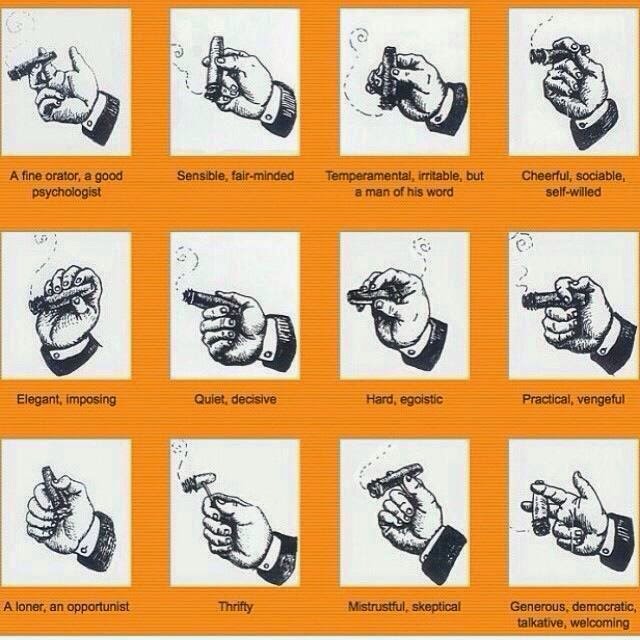
One of the reasons why I enjoy cigar culture is that it is one that embraces the novice taking time and patience to properly cultivate him.  if you have a question about cigars the best place to go is your local cigar bar or lounge where the main topic of discussion is always cigars.  During my brief experience with them I have discovered that cigar enthusiasts are some of the most knowledgeable about their art form and they love to share their wisdom with others. So I pulled up to one of my favorite cigar lounges on my motorcycle and after situating myself on the outdoor café I asked the question, “Is there a proper way that a gentleman should hold his cigar”?  Well everybody switched over from whatever side conversations they had to offer their opinions.  Based on how my peers opined it was amply clear why I gravitated toward the culture of cigars, they all agreed that there was no “Official” way in which to hold ones cigar and encouraged me to find the style that best suited me. 
A Vintage Diagram Showing How A Gentleman Might Hold A Cigar


Aside from the question of how a gentleman should hold his cigar which was suitably answered I was also eager to understand how I could get the most enjoyment out of my cigars.  I wanted to know more about everything, for instance, if the angle in which the cigar is held can affect its ability to evenly burn.  My question was answered amply suggestions that the cigar be held as level as possible, similar to the way it would sit in an ashtray but the most important factor appeared to be not the angle but the light and draw.  The general consensus was that a cigar when properly lit on an even plane will burn uniformly if drawn at regular intervals.  The cigar is a cylinder of tightly rolled tobacco leaves and a good cigar will be rolled evenly enough so that when the smoker draws or sucks air from the lit “foot” drawing smoke down to the “head” at his mouth the uniformly spaces leaves and air space between them will yield a perfectly uniform burn pattern.  In contrast, a cigar that is not evenly lit will burn more in none area of the cross section than another causing an uneven burn.  So while I am avidly discussing cigars with the other gentlemen around me I am also taking mental notes on how they hold their cigars and manipulate them whilst talking and sipping their fine whiskeys, brandies, scotches, gins, rums and such.  A cigar is a relatively small object but while one is smoking it one is continually conscious of its angle and location with respect to everything else in the immediate environment.

The Anatomy of A Cigar.  Two Common Cigar Shapes


The anatomy of the cigar is quite simple; the foot is usually but not always the cut open end of the cigar and the head is the rounded or truncated closed end that must be cut.  The smoker brings the head to his mouth to draw from so it’s easy to remember the smoker brings the head of the cigar to his head positioning the lit foot away from his face. One of the other factors that affects the way a cigar will burn is its gauge.  The diameter of a cigar is measured with a ring gauge varying from the smallest gauge of 24 to 64 and above.  The largest gauges will have a cooler, slower burn and of course the smallest gauges will burn much hotter and faster. 

A Dandy Smoking His Cigar Around The Turn Of the 19th Century


So I focused on how to properly cut the cigar, watching countless videos on the subject matter on YouTube.  As I built my expertise in the art of smoking cigars during my first year I began to acquire many different tools of the trade, the most important of which was the cutter.  There are many different types of cigar cutters but none of them can be any effective use until the smoker develops an understanding of how the way he cuts a cigar will affect the way it draws and burns.  So I bought a large selection of very differently shaped cigars and experimented with various cuts to see how it would affect the draw.  Not surprisingly the way I cut the cigar totally affected the way it burned and drew.  Most Americans prefer the higher ring gauges and it is with these broader cross sections that proper cutting pays off.  


A wide-gauged cigar such as a 50 or 64 gauge if not evenly lit can begin to burn on one side or in one area of the cross section where the draw brings the most oxygen to the fire.  When a cigar burns unevenly in this manner I call it “channeling” since it burns along an isolated channel or air flow pocket of the cigar.  If you see that your cigar is channeling you can re-cut the foot and re-cut the head so that you can draw more oxygen into the cigar evenly across its width.  There are many tricks of the trade and while many of them can be learned simply by hanging out with experienced and knowledgeable cigar enthusiasts there is always the fun of discovery through trial and error.  In the cigar realm however trial and error can be an expensive tuition since the cost of most cigars is at least $10.00.

A Ring Gauge Used to Determine Cigar Size


Holding his cigar is a gentleman’s unique signature, he can choose many different styles but whilst he smokes he should always be conscious of the manner in which his cigar is burning.  Most gentlemen actually rotate their cigar while they are holding it or laying it upon an ash tray the same way they do when lighting it.  This makes perfect sense because heat rises vertically causing the higher areas to burn faster than the lower ones if held horizontally.  I’ve noticed that experienced smokers are attentive to their cigars continually checking the burn pattern and I have noticed that maintaining a regular draw/burn and rotation ratio will typically keep an even burn.  So while there are no rules governing how a gentleman should hold his cigar there are some fundamental physical factors that impact the way a cigar will burn that drive the way he will handle it at any given point.  Like many of the things that make cigar culture attractive a gentleman can take his time perfecting a unique style for holding and smoking his fine cigars. Refreshingly, there are no rules of etiquette governing the manner in which a gentleman should hold his cigar.  If this were the case I fear the art would have long since died away.  Cigar smoking is all about relaxation not about adherence to any strict, aesthetic form.   

FIN

Written By: BIGDADDY BLUES


GALLERY


Various Cigar Shapes


Thursday, August 28, 2014

CIGAR 101


CIGAR SMOKING 101 FOR BEGINNERS

When I first began to smoke cigars I was fortunate enough to land into a strong camp of support and knowledge for the arts.  Here is a list of things that a novice to cigars should keep handy:

1.     Invest in the basic tools required for smoking cigars but spend frugally at first:

a)     Double or triple torch cigar lighter between $15.00 and $35.00 at first.


b)    Two-blade cigar cutter between $5.00 and $10.00 at first.


c)     Disposable Humidifier Packet until you get a proper humidor  between $12.00 and $15.00 ea.

d)    Zip-Loc plastic liner to store your cigars until you get a proper humidor, (provided by most tobacconist shops).
e)     Single or double portable pocket cigar case.
e)  A portable humidor.

f)     Small pocket sized cigar diary (just use any small spiral bound notebook 3 inches x 4 inches and small glue stick to keep a record of the cigars you have smoked.


2.   Do not store cigars in Ziploc bags when traveling except after you purchase them going from the store to your humidor, constant abrasion will crush, bend, break and fray the delicate tobacco liner ruining the cigar causing it to draw poorly when lit.
3.   Do not store cigars in direct sunlight, do not refrigerate them or store them in hot, dry places.
4.   If your cigar goes out after sitting for more than 10 or 15 minutes carefully clean away the ash cut it clean and re-light it; do not smoke an old cigar it will have a bitter, burnt and or stale flavor.
5.   If lighting a cigar with a match allow the sulfur to burn off before drawing it into the cigar.
6.  Lightly toast the cut burning end of the cigar before lighting it with the lighter or match  to facilitate an even burn.
7.   Take time to develop a comfortable style with which to hold your cigar.
8.   Always keep cigars in a container where the humidity is controlled.  When you buy cigars from the shop and do not have your portable humidor purchase a disposable humidifier pack and have the purveyor place it into a Ziploc bag with your cigars.  If you are frugal ask for a second bag and place a moist paper towel inside it so that it does not touch the cigars.
9.  Save the ring labels of all the cigars you smoke and keep your cigar diary with you so that you can document the experience you had each time you try a new or familiar stick.
10. Go to local cigar bars/lounges, cigar functions and conventions to meet people who smoke, these people have many years of experience under their belt and will gladly take you under their wing.  Most of the important education you will get about cigars will come from seasoned smokers.
11.  Familiarize yourself with all of the cigar establishments in your area whether at home or while traveling.
12. Dispose of your cigars responsibly.  A lit cigar can cause a serious fire if thrown into a trashcan, a pile of leaves or if thrown near any flammable material; it will continue to smolder for many minutes after it appears to be quenched. 
13. If you are in a place of public assembly always ask those around you if they have an issue with your smoking before lighting up. 
14. If you are in public do not spit while smoking your cigar, if you must spit do so by discretely lifting a napkin to your mouth.
15. While smoking a cigar be mindful of the proximity of others who might be burned by your cigar and be careful not to place the cigar on surfaces that may be scorched and ruined by the cigar fire.
16.While you are experimenting with different cigar shapes and strengths try different ways to cut your cigar.  Each unique cigar cutter affords a different way to draw smoke there is the traditional cutter and the "V" or channel cutter and the "Hole-Punch" used for cigars with rounded ends.

FIN

BY BIGDADDY BLUES


GALLERY

A "V" or channel blade cigar cutter


A single-bladed cigar cutter


A portable humidor


A hole-punch